|
Beginners DotsWhen you place a dot after a note in sheet music you are essentially adding on to that note half the value of it. Example 1 : There is a whole note worth 4 beats, it is then dotted so we add on half of 4 which is 2, so a dotted whole note is worth 6 beats. Example 2 : There is a dotted half note. A half note is normally worth 2 beats, so when you place a dot after it you add on half the value of 2, which makes it 3 beats long. Example 3 : There is a dotted quarter note. A quarter note is worth 1 beat, when you place a dot after a quarter note you add on half the value. Half of 1 is a half, so a dotted quarter note is worth 1 and a half beats.
|
|||
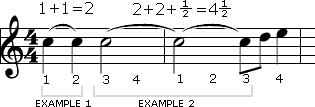
TiesA tie is shown by a curved line from one note to the next. When dotting notes you can only add on half the value of that note. Yet, when a note is tied to another you are adding on the value of the note it is tied to.
The first note is played and the second note is not sounded but the value of that note is added on to the first. Example 1 : The first note is now worth two beats. Example 2 : The first note (which is placed on the third beat of the bar), is now worth 4 and a half beats.
|
|||
 Reading Sheet Music